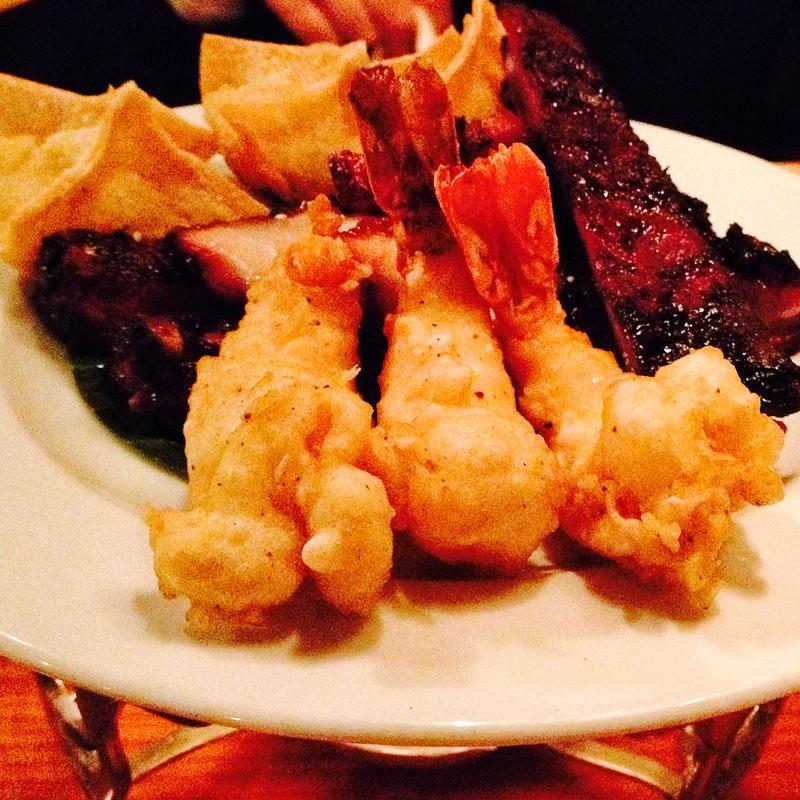
On to Aqaba for some rum drinks and Cosmo Tidbits
 Many moons ago, when the flame of stupidity burned hotter than it does now and the call of mischief was considerably louder, I used to roll into Trader Vic’s in Beverly Hills at Merv’s place, the venerable Beverly Hilton. I
  would throw down a river of Samoan Fog-Cutters and if the timing was right, I’d order something called Cosmo Tidbits. Never found out who Cosmo was (Cosmo Topper ?), but I always enjoyed his tidbits:
crispy rolls of Asian delights, ribs bathed in red dye number 2, enough deep fried grooves to make Orson Wells cry with happiness and perfect if you’re a quart low.
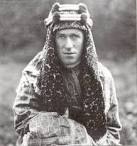 So in honor of Cosmo here are a couple of History’s tidbits: 1) Lawrence of Arabia was called Ned by his family (Ned of Arabia?) and only became famous after WWI because he was featured in a 1919 lecture tour by American war corespondent Lowell Thomas. Unlike the 6 foot 3 inch Peter O’Toole who portrayed him in the 1962 epic “Lawrence of Arabia” (the film is unusual because there are no women with speaking credits), the real Lawrence was just 5’4″ and was very self conscience of his diminutive stature. He refused knighthood because of his belief that the British government betrayed the Arabs, but he did join both the Royal tank corp and the Royal Air Force under assumed names to dodge the glare of celebrity and lived under assumed names until his death. Lawrence
  worked for and became great friends with Winston Churchill, who upon hearing of Ned’s passing said “I deem him one of the greatest beings alive in our time.” Lawrence died in a motorcycle accident in 1936 at the age of 46 and the surgeon who tried to save his life, Dr. Hugh Cairns, then developed some of the first crash helmets for motorcycle riders.
 2) The Statue of Liberty’s full name is Liberty Enlightening the World, or as I call her, Lew. She was given to us as a gift from France in 1886 and was designed by Fred Bartholdi. Lew’s shoe size is a 879 wide. Gus Eiffel, of Eiffel Tower fame (1889) was the cat who built the metal frame work
 that holds the copper skin of Lew. Gus was later found guilty of misappropriation of funds during France’s failed attempt at the Panama canal, but never did a stretch in the Big House because of a technicality. If you hold 2 pennies together that is the thickness of the copper skin on Lew (3/32 of an inch). Lew was slightly injured when some wacked out German saboteurs set off a bomb in 1916, but she shrugged it off and has been looking
 really good for a gal 128 years old (a bit on the stiff side, but still very cool.)
It has been a long time since I’ve been to Trader Vic’s and perhaps it is time to return. I first went there as a young tot with my Grandpa Dan, who was a dapper gentleman, both kind and generous. I think a few Samoan Fog-Cutters are in order, so if anyone would like to join me, please let me know. It’s time that we throw down some sweet Rum mystery, order up a  couple of Cosmo Tidbits and make numerous toasts to Ned, Lew, and Granpa Dan. Besides, right around now I am feeling a quart low. Groove.




















 It is true that screen writer Robert Towne (Shampoo, the Last Detail ) wrote the screen play for ” Chinatown ” at the Banning House Lodge at the Isthmus on Catalina Island, California. It is true that the Ford Thunderbird, the low, stylish two-seater iconic car of the 50’s, was named after the Thunderbird Country Club in Rancho Mirage,
  California . The country club was also the first place that golf carts were used, invented by assistant pro Eddie Susalla. It is also true that during World War II, the casualty rate for every 1000 US Army soldiers in uniform was 24, for the US Marines there were 29 casualties for every 1000, and for the US Air Corps it was a startling 400 of every 1000 bomber crew members that were casualties. The average age of a typical US soldier in WW2 was 26 (in Vietnam it was 19) born in the year that the war to end all wars ended (World War I, 1918). He weighed 144 pounds and was 5’8″. One in three only had a grade school education, one in four held a high school diploma, and one in ten attended college for at least one semester. This is all true.
 But what is not true is that Fast Eddie O’Hare turned in his client Al Capone to the Feds and the IRS because he wanted his son Butch to learn the value of honesty and integrity. There have been attempts to tell this tale as a story of redemption and a morality play to demonstrate the importance of recognizing the errors of one’s ways, of atoning for one’s misdeeds, of trying to do right and prevent one’s sins from being visited upon future generations. All valuable lessons indeed, but they have little to do with the true story of Fast Eddie, Ursula (Eddie’s fiance), Eddie’s son Butch, and Al ” Scarface” Capone.
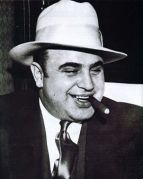 Chicago night life was doing him favors. Eddie hooked up with Ursula Sue Granata whom he planned to marry, but being a good Catholic lad he couldn’t pull the marriage trigger because of the divorce, which made Ursula none too happy. Eddie sent a lot of dough to the Vatican in hopes that a request for a dispensation would come through, but Eddie had to keep on waiting. Eddie was rolling in the green doing legal work for Al and sharing in the huge profits from these less than noble activities. Besides dancin in the dough, living the highlife with Ursula, and groovin with Big Al, Eddie was also an adoring father to his son Butch who he tried to give all the best things in life.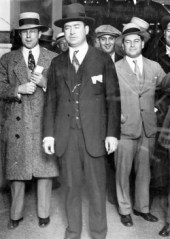

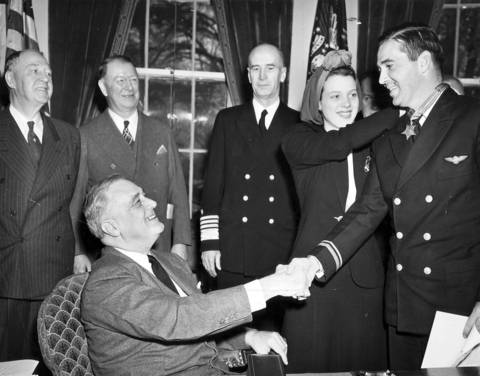
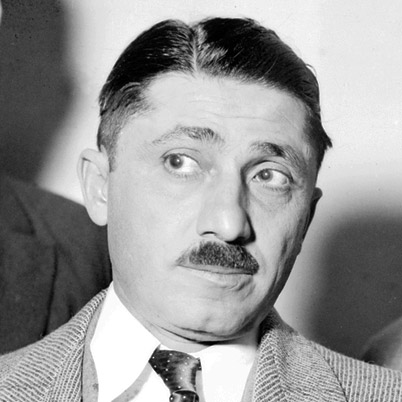
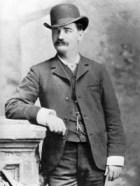
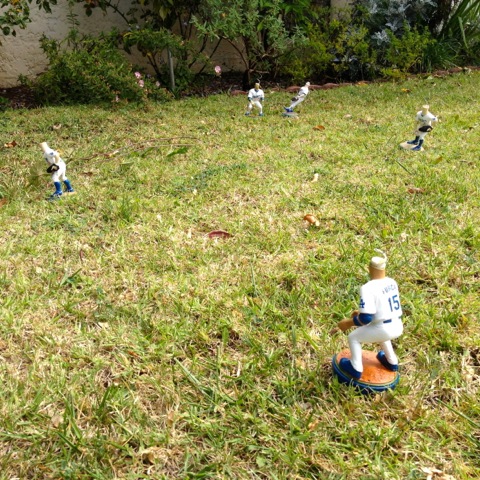
 and Bat never used the High Five after dispatching a deserving bad guy and putting him six feet under, because the High Five was invented by the great Glenn Burke in 1977 ( Great? Batting avg .237, Hr 2 , RBI 38 ). Glenn was a Major League Baseball player for the Dodgers and Oakland A’s from 1976 to 1979 . Burke was the first and perhaps only Major League Baseball player known to have acknowledged his homosexuality to teammates and management and the first to do so publicly. Burke’s association with the Dodgers was a difficult one. According to Glenn’s 1995 autobiography “Out at Home,” Dodgers General Manager Al Campanis

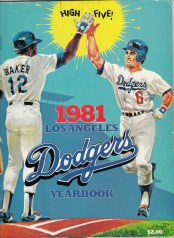 An article published in Inside Sports magazine in 1982 made Burke’s gay life public knowledge. After baseball, Burke turned to drugs and alcohol which destroyed him both financially and physically. He was repeatedly arrested for alcohol and drug offenses and lived on the streets of San Francisco. On May 30th,1995 he died of AIDS complications. He was 42 years old.

 GrooveCentralLA